Small-space home office setups that actually work
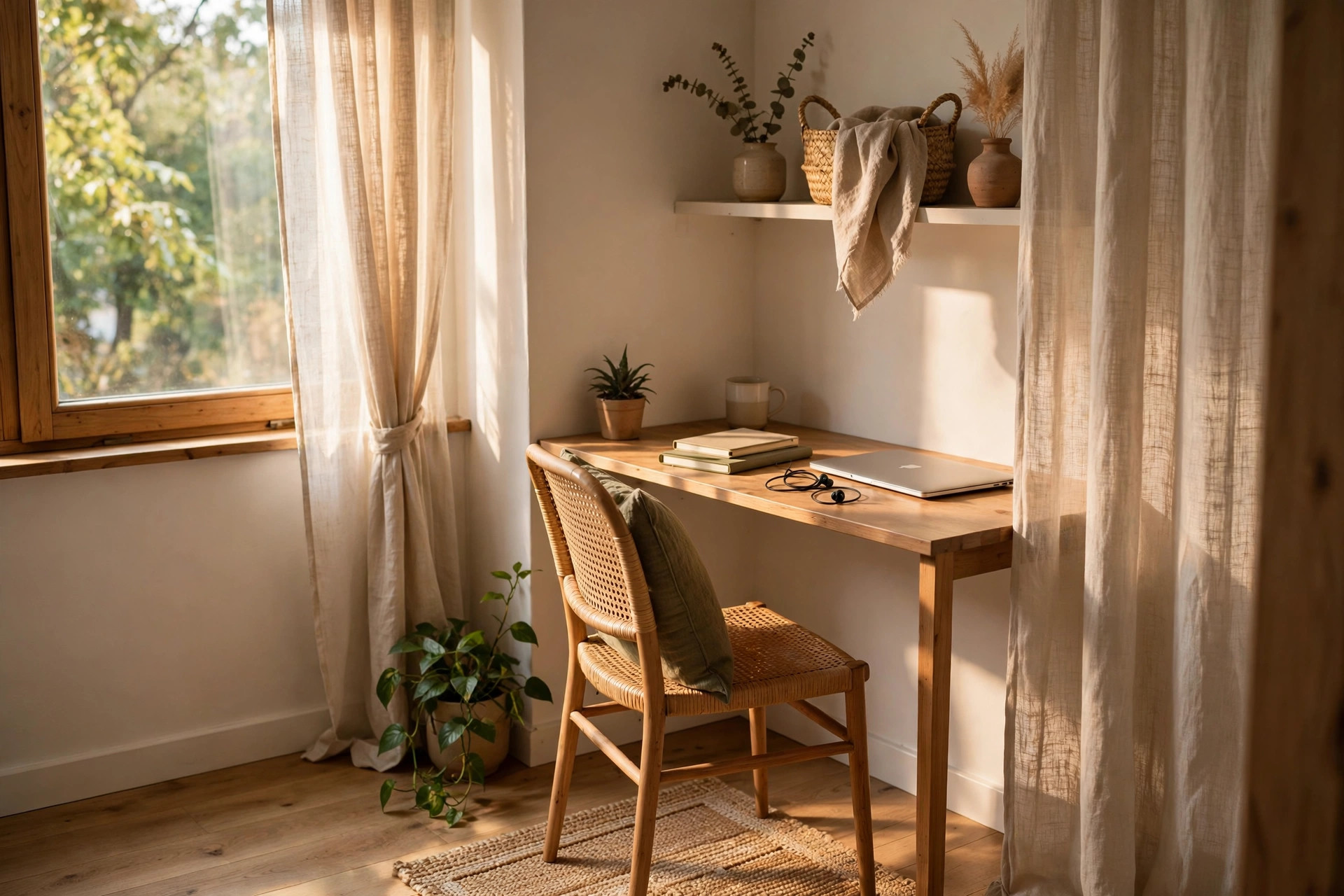
Every small-office article shows you the same gallery: the corner desk, the closet office, the floating shelf. What none of them do is start where the project actually starts — with your tape measure. A desk that doesn't fit the space is an expensive mistake, and in a small home there's no spare room to absorb one. This guide is planning-first: measure, choose the setup type that fits, dodge the renter traps, and build the boundary that keeps work from colonizing your evenings.
Measure your space before you buy anything
Four measurements, in order — write them down and use them against every product page:
- The footprint. Tape out the candidate spot on the floor. The desk needs its own dimensions plus chair clearance behind it to push back and stand up. The honest test: sit in the taped-off spot for 90 minutes. Comfortable? It works. Cramped at minute ten? No furniture will fix it — pick a different spot.
- Chair tuck space. The chair must slide fully under the desk. Floating and wall-mounted desks only save space if the chair can actually disappear underneath.
- Desk depth for your gear. A laptop needs less depth than a monitor on a stand. Measure your setup's real depth requirement, then add a few inches.
- Power and light. Note the nearest outlet and window. A perfect corner with no outlet nearby is a project, not a spot.
What success looks like: four numbers on paper, and every desk you consider either fits all four or is eliminated in seconds.
The four small-space setup types (and which fits yours)
Nearly every workable small office is one of these four. Use the chooser to find yours:
- The corner nook. A slim desk tucked into a corner, ideally near a window. Best when you want the setup to visually disappear — push in the chair, close the laptop, and the corner blends back into the room. Watch for dim corners (add a wall lamp) and window glare.
- The cloffice. A closet converted into a mini office. Best when you need a door between work and life — close it at 5pm and the office ceases to exist. Watch for depth: measure that the chair fits with the door closed.
- The floating/fold-down desk. A wall-mounted or fold-down surface that vanishes when not in use. Best when floor space is the binding constraint. Watch for weight limits — and the fact that you must clear the desk every time you fold it.
- The dual-purpose surface. A console or narrow dining table that works by day and serves the home by night. Best when no surface can be dedicated to work. Watch the height — dining tables run tall for typing, so pair with an adjustable chair and footrest.
The chooser: need a door to end the day? → cloffice. Floor space is the limit? → floating/fold-down. No surface to spare? → dual-purpose. None of those constraints? → corner nook, the simplest and most forgiving option.
The renter's workaround kit (no drilling required)
Floating desks and wall-mounted storage assume you can drill. Many leases say otherwise — and drilling into structural walls without permission is a fast way to lose a deposit. The workaround kit:
- Freestanding fold-down tables instead of wall-mounted desks — same disappearing act, zero holes.
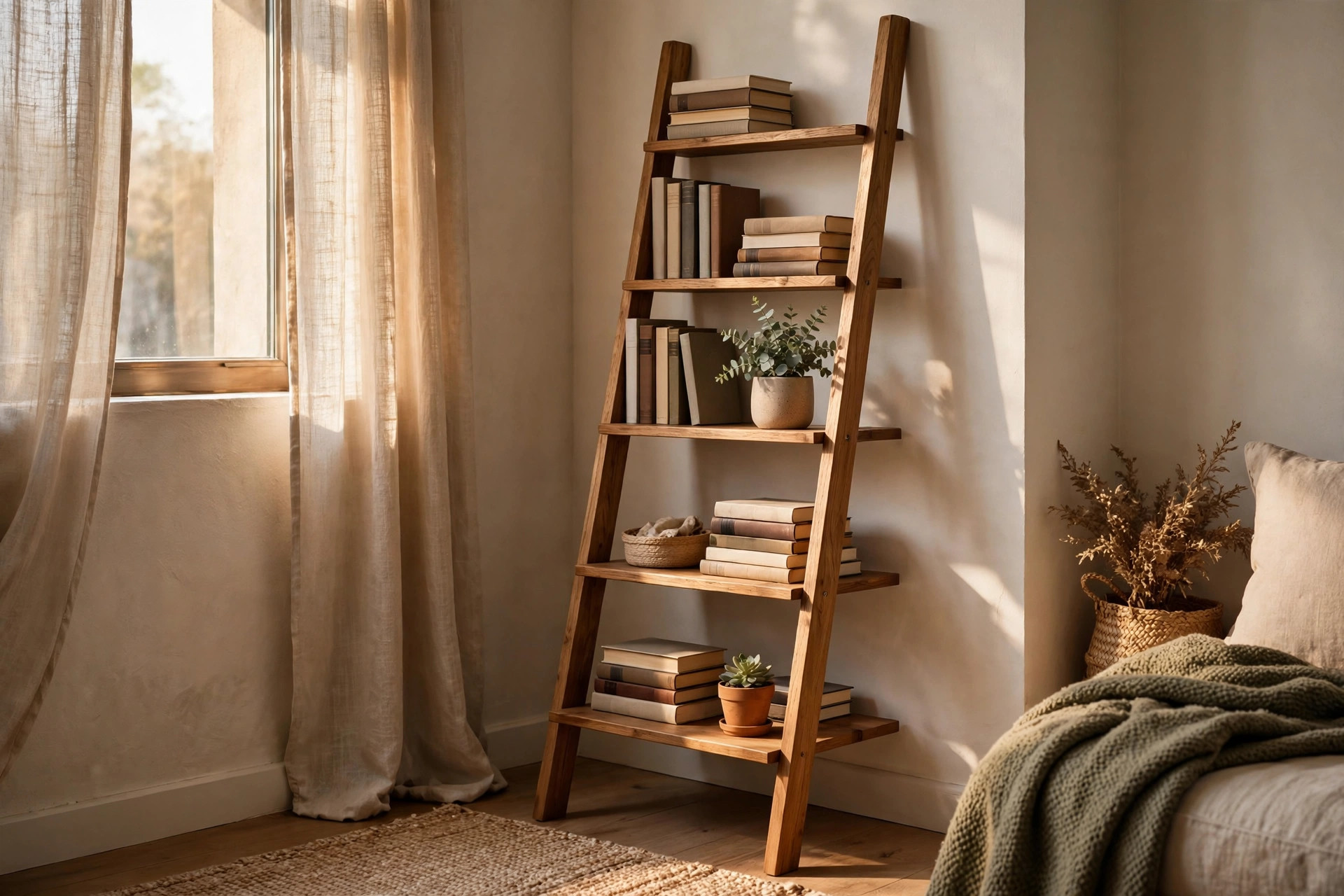
- Leaning ladder desks instead of mounted shelving — they rest against the wall and hold a surprising amount.
- Tension-rod and freestanding shelving for vertical storage without brackets.
- Rolling carts instead of filing cabinets — your storage, tech, and supplies on wheels, parked wherever fits.
- Adhesive cable management — clips, trays, and ties that stick rather than screw. Cables are the fastest way a small setup looks chaotic, and they're fully solvable without tools.
- Check the lease first. Some landlords allow small anchors with spackle-and-paint repair on move-out; others don't. A five-minute read of your lease beats a five-hundred-dollar deposit deduction.
A good planning shorthand is the 3-4-5 rule: 3 core items (desk, chair, light), 4 functional supports (storage, tech, cable control, power access), and 5 visual limits (keep décor minimal). In a small space, everything beyond those has to earn its place.
The shutdown boundary: ending the workday in one room
The problem nobody's gallery addresses: when your office is your living room, work never visually leaves. The fix is a shutdown ritual — a short, repeatable sequence that tells your brain the workday is over:
- Close it. Shut the laptop, fold the desk, close the closet door — whatever your setup type allows. The physical act of concealing the workspace is the strongest signal.
- Change the light. If you use a desk lamp for work, turn it off and switch to the room's evening lighting. Light is a powerful context cue.
- Clear the surface. Even if the desk stays out, a clear surface reads as "home" while a keyboard-and-mug landscape reads as "office." Thirty seconds of tidying buys the whole evening.
- Move something. Push the chair fully in, roll the cart to its parking spot, hang the headphones on their hook. The room should look different at 6pm than at 9am.
FAQ
Can I use my dining table permanently? You can, but watch the height: if the table leaves your shoulders raised while you type, it's too tall for full-time work. An adjustable chair plus a footrest usually solves it. And commit to the shutdown ritual — a table that always looks like a desk makes every meal feel like a meeting.